
Impaction in bearded dragons occurs when material accumulates in the digestive tract and cannot pass normally. In mild cases, this may look like simple constipation. In more severe cases, it can progress to pain, weakness, neurological signs, or life-threatening obstruction.
Impaction is rarely caused by a single factor. Inadequate basking temperatures, dehydration, oversized prey, and ingestion of substrate can all reduce normal gut motility. When those stressors combine, the risk increases. If you want the exact basking surface targets by age, see the Bearded Dragon Basking Temperature Guide.
Most cases are preventable. Early recognition and appropriate intervention make a significant difference in outcome. This guide explains how impaction develops, what warning signs require urgent care, and how to reduce risk through practical husbandry decisions.
What Impaction Is (And What It Isn’t)
Impaction refers to a physical blockage or severe slowdown within the gastrointestinal tract that prevents normal passage of stool. The obstruction may consist of compacted substrate, dried fecal material, undigested food, or a combination of these. When motility slows and material accumulates, pressure builds within the abdomen, which can lead to pain, straining, and systemic stress.
A healthy adult bearded dragon may not pass stool every single day. Frequency varies with age, diet, hydration, and temperature. A single missed bowel movement — especially if the dragon is otherwise alert, eating, and active — does not automatically indicate impaction. Concern rises when reduced stool output is paired with appetite loss, lethargy, visible straining, or a firm, distended abdomen.
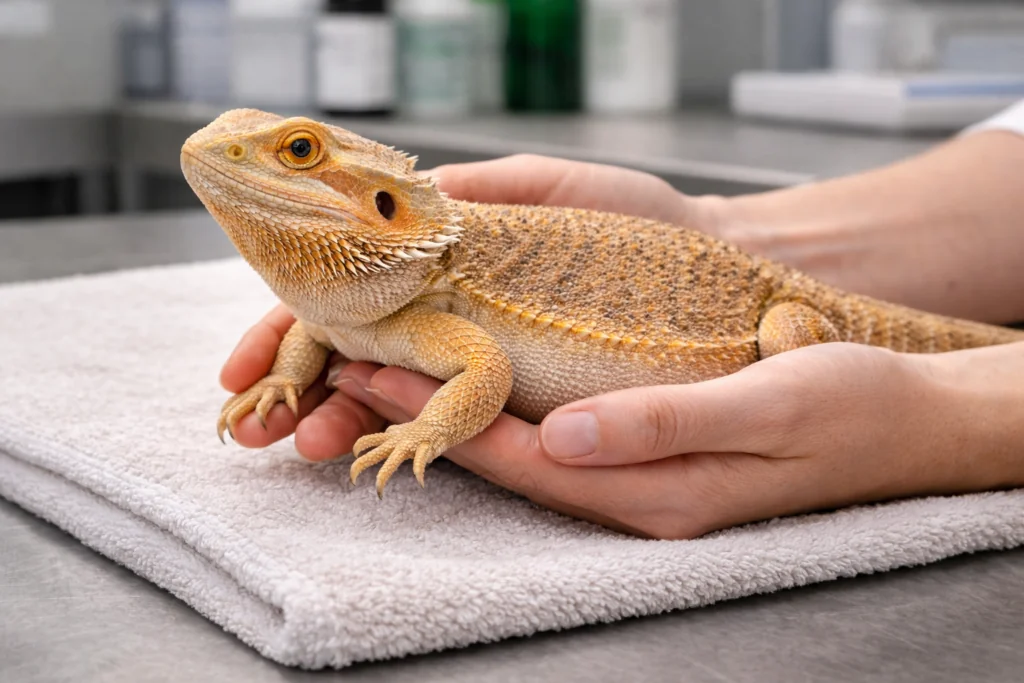
A dragon with normal digestion typically has a soft, pliable lower abdomen when gently supported. In contrast, an impacted dragon may feel unusually firm through the lower belly, particularly just forward of the pelvis. Some will tense the body or resist handling when that area is touched.
Impaction is a medical condition that requires context to diagnose. The surrounding signs — appetite, energy level, abdominal firmness, and visible straining — determine whether the situation is routine or urgent.
How Impaction Develops — The Mechanism
Bearded dragons depend on heat to digest food efficiently. After eating, they rely on adequate basking temperatures to raise their core body temperature into a range that supports enzyme activity and normal intestinal movement. When basking temperatures are too low, food moves more slowly through the digestive tract. As transit time increases, moisture is reabsorbed from the stool, making it drier and more compact.
Hydration plays a similar role. A well-hydrated dragon produces stool that is formed but not excessively hard. When hydration is inadequate — whether from low water intake, limited moisture in the diet, or chronic suboptimal husbandry — fecal material can become firm and difficult to pass. What begins as simple constipation can progress if conditions do not improve.
Oversized prey adds another mechanical challenge. Insects that are too large or fed in excessive volume require more breakdown before they can move smoothly through the gut. Harder-bodied feeders are not inherently dangerous, but when paired with low heat, dehydration, or reduced activity, they increase workload within an already slowing system.
Substrate ingestion compounds the risk. Dragons that feed directly off loose particulate may consume small amounts incidentally. In mineral-based substrates, these particles are dense and non-digestible. When combined with drying stool, they can contribute to accumulation in the lower intestine.
Impaction rarely develops from a single mistake. It more often results from stacked stressors — slightly low basking temperatures, marginal hydration, a large meal, or substrate exposure occurring in combination. When multiple minor husbandry gaps overlap, the digestive system is placed under strain. Understanding that cumulative effect is key to prevention.
Common Causes and Risk Factors
Impaction becomes more likely when everyday husbandry details are slightly off. No single mistake guarantees a problem, but repeated or overlapping gaps in care can slow digestion and make stool difficult to pass.
Inadequate Basking Temperatures
Digestive motility depends on appropriate surface basking temperatures. When the basking area is consistently too cool, food remains in the gastrointestinal tract longer than intended. As transit slows, excess moisture is drawn from fecal material, increasing firmness and resistance during elimination. Even a modest but chronic temperature deficit can contribute to slowed digestion.
Dehydration
Hydration status is often underestimated. Bearded dragons do not always show obvious signs of dehydration until it becomes advanced. Subtle dehydration can still affect stool consistency. Diets low in fresh greens, limited access to moisture-rich foods, or chronically dry conditions can gradually increase stool density. The resulting dryness makes passage more difficult, particularly when other stressors are present.
Oversized or Excessively Hard Feeders
Prey items that exceed the recommended size guideline — generally no larger than the space between the dragon’s eyes — require more breakdown before moving through the gut. Hard-bodied feeders such as large mealworms, superworms, or adult crickets with thicker exoskeletons are more resistant to breakdown than softer feeders like appropriately sized roaches or silkworms. When offered in large quantities or to very young dragons, they place more strain on the digestive tract.
Loose Particulate Substrates
Loose substrates introduce the possibility of incidental ingestion. Fine sand, calcium-based substrates, and other particulate materials may be consumed during feeding. Mineral substrates are non-digestible and can accumulate when motility is slowed.
Juvenile dragons are particularly vulnerable due to smaller body size, higher feeding frequency, and more active feeding behavior. Younger dragons often chase prey quickly and strike repeatedly, which increases the likelihood of ingesting substrate along with food.
For new keepers — and especially for baby or juvenile dragons — starting with solid substrates removes one variable while husbandry fundamentals are being established. Many experienced keepers remain with solid surfaces long-term. Others successfully use well-managed particulate setups once temperatures, hydration, and feeding practices are consistently optimized. Substrate alone does not determine outcome, but it can magnify other weaknesses. If you’re deciding what to use in the enclosure, see the Bearded Dragon Substrate Guide.
What Severe Impaction Looks Like on X-Ray
X-rays are used to confirm suspected impaction.
The X-ray shown below is from a bearded dragon housed on play sand covered with calcium-based sand. The granular material visible throughout the abdomen represents ingested mineral substrate that accumulated in the lower gastrointestinal tract. The amount present is far greater than what would be expected from normal fecal material alone.

In severe cases like this, the digestive tract can become distended as material builds. Prolonged obstruction increases discomfort, reduces appetite, and can contribute to systemic decline if not addressed promptly.
This dragon recovered with veterinary treatment, including supportive care and assisted evacuation. Early intervention significantly improves the likelihood of a favorable outcome.
What To Do If You Suspect Impaction
If you suspect impaction, the first step is to assess severity. A dragon that is alert, mildly constipated, and otherwise behaving normally may be managed conservatively for a short period. A dragon that is lethargic, visibly bloated, straining repeatedly without output, or showing weakness in the hind legs should be evaluated by a veterinarian without delay.
For mild, early cases, supportive care may help restore normal motility. Ensure basking surface temperatures are within the appropriate range for the dragon’s age. Provide a warm soak in shallow water (elbow height or lower), allowing the dragon to sit calmly for about 10–15 minutes while supervised. If you are unsure about safe water depth or temperature, see Do Bearded Dragons Need Baths? How Do I Bathe My Bearded Dragon?. Gentle abdominal massage — using light pressure directed from the upper abdomen toward the vent — may help stimulate movement. The abdomen should not be compressed forcefully.
Hydration should be supported through access to fresh water and moisture-rich foods appropriate for the dragon’s age. Avoid force-feeding, large meals, or additional hard-bodied feeders during this period.
If there is no noticeable improvement, or if concerning signs develop at any point, veterinary evaluation is warranted. A veterinarian may perform imaging, administer fluids, provide cloacal enemas when appropriate, or recommend additional treatment depending on severity. In advanced cases, surgical intervention may be required.
When in doubt, earlier assessment is safer than delayed intervention. Impaction can progress, and timely care significantly improves outcome.
Prevention — Practical Husbandry Standards
Preventing impaction begins with consistency. Stable basking temperatures, appropriate prey sizing, and adequate hydration support normal digestive motility and reduce the likelihood of stool drying within the intestinal tract.
Maintain age-appropriate basking surface temperatures and verify them with a reliable infrared thermometer or probe. Surface temperature — not just ambient air temperature — determines how effectively a dragon can digest a meal.
Feed prey that fits comfortably within the recommended size guideline. Offering appropriately sized insects in measured quantities reduces mechanical strain and decreases the likelihood of incomplete breakdown.
Support hydration through regular access to fresh water and moisture-rich greens. Dragons that consume a varied diet with adequate plant matter tend to produce more normally hydrated stool.
Substrate choices should reflect experience level and life stage. For baby and juvenile dragons, solid substrates remove a potential ingestion variable while husbandry is being refined. If loose particulate substrates are used later, feeding methods should minimize direct substrate consumption, and enclosure conditions should be consistently optimized.
Impaction is most often preventable. Attention to foundational care reduces risk far more effectively than reactive treatment after symptoms appear.